Crossover Design
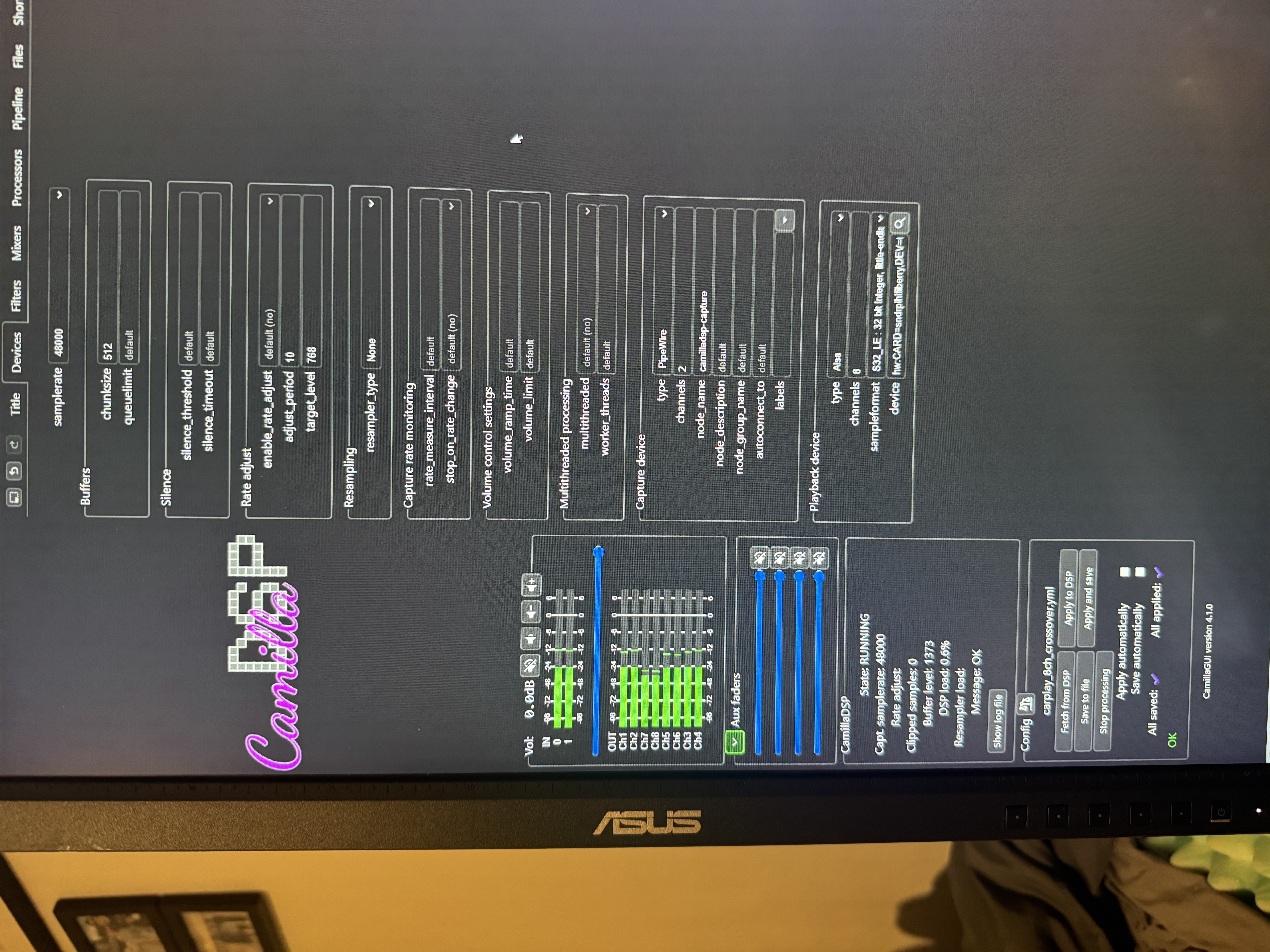
Different speaker types require different frequency ranges. Digital filtering allows the system to control which frequencies are sent to each amplifier channel.
Project / Automotive Audio
A custom multi-channel automotive audio system built around Raspberry Pi and CamillaDSP, combining digital signal processing, custom amplification, and a large speaker system.
01 / Overview
The goal of this project is to build a high-output, multi-channel audio system where the Raspberry Pi handles the digital processing instead of relying entirely on a conventional aftermarket DSP.
Using CamillaDSP allows the audio system to be treated as an engineering problem. Signal levels, filters, channel routing, volume, and crossover behavior can all be controlled digitally and modified through software.
02 / Signal Chain
Audio enters the Jeep through the modern digital source system.
The Pi provides the computing platform for audio control and DSP integration.
Digital processing provides volume control, filtering, channel management, and crossover functionality.
Multiple amplifiers provide the power required by the different speaker groups.
Dedicated midrange, tweeter, midbass, and subwoofer drivers create a multi-channel system.
03 / Hardware
Open-source digital signal processing software provides the core processing layer for the system.
The Pi replaces the role normally handled by a conventional aftermarket DSP/head unit and provides a programmable platform for the entire system.
AudioControl and DS18 amplifiers provide separate amplification for the various sections of the speaker system.
The system combines DS18 midrange and tweeter drivers, dedicated midbass drivers, and Sundown Audio subwoofers.
04 / Speaker System
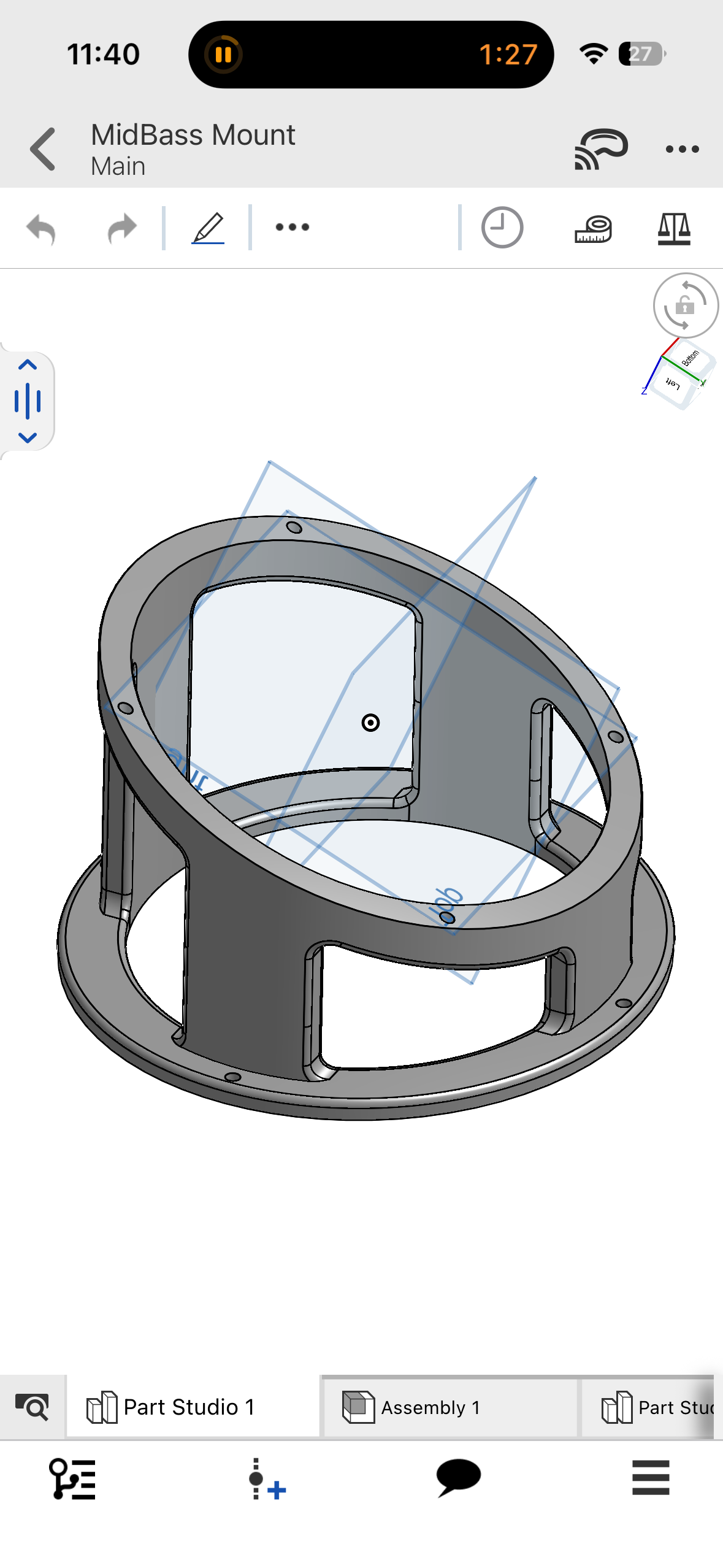
Rather than asking a single speaker to reproduce the entire audible range, the system uses dedicated drivers for different parts of the spectrum. This gives the DSP more control over the signal delivered to each amplifier and speaker.
Midrange
Four speakers
Tweeters
Four speakers
Midbass
Two speakers
Subwoofers
Two 12-inch speakers
05 / Digital Signal Processing
CamillaDSP gives the project a software-defined signal processing layer. Instead of permanently committing the system to one configuration, the processing chain can be changed and tested through software.
06 / Engineering
Different speaker types require different frequency ranges. Digital filtering allows the system to control which frequencies are sent to each amplifier channel.
The amplifier and DSP levels have to be coordinated so the system can achieve useful output without unnecessarily increasing noise or clipping.
The Jeep's electrical environment introduces challenges that are very different from a modern vehicle. Grounding, power distribution, shielding, and signal routing all affect the final result.
The Raspberry Pi provides a programmable interface for volume control and amplifier control, allowing the audio system to become part of the larger Jeep Computer project.
07 / Vehicle Integration
The audio system is not being developed independently from the Jeep Computer. The Raspberry Pi provides a common computing platform, allowing the audio controls, CarPlay interface, amplifier control, and vehicle monitoring system to work together.
Input
CarPlay / Audio Source
Processing
Raspberry Pi + CamillaDSP
Output
Amplifiers + Multi-Driver System
08 / Development
The system continues to evolve alongside the Jeep Computer. Future work includes refining the DSP configuration, improving electrical noise performance, tuning the system, and integrating additional controls into the vehicle's central computer.
Related Project